Snowbird Car Shipping 2026-27: Best Time to Book & Costs
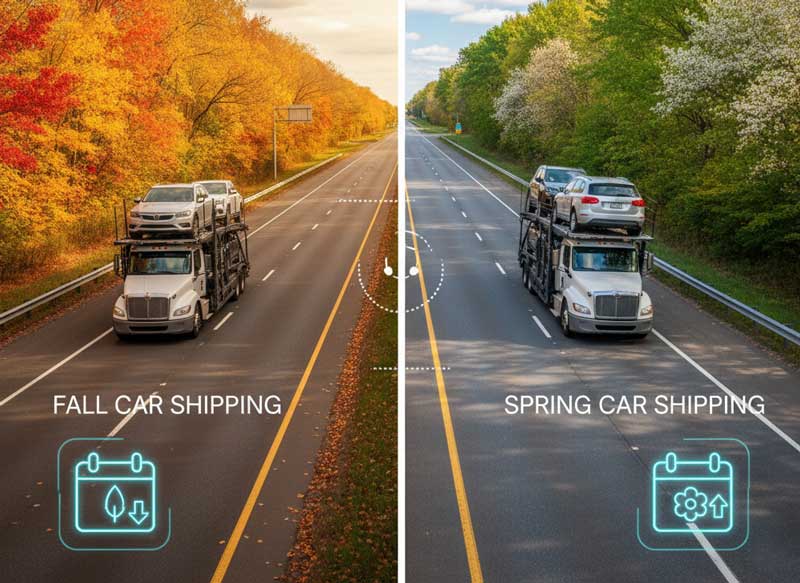
Table of Contents
You’ve booked the winter rental in Florida or Arizona, and now you need a plan for the car.
Driving 1,200 miles or more twice a year costs money on gas, accommodations, and time — plus wear on the vehicle. Shipping it costs a flat fee and a phone call. This guide covers when to book snowbird car shipping, what it costs by distance and route, how fall and spring differ, and how to avoid the price jumps that catch people in the busiest weeks.
We’re US Car-Go Freight, a licensed auto transport broker in Tampa, Florida (DOT 3911910, MC 1444325). We arrange door-to-door car shipping across the 48 contiguous states, including the main snowbird routes between the Northeast, the Midwest, and the Sun Belt.
Get your free snowbird shipping quote or call (888) 249-8840.
Moving for the summer or another season instead? See our guide to seasonal auto relocation.
The Short Answer
Request your quote 3 to 4 weeks before pickup in October and November, and 4 to 6 weeks ahead for December and January. For a standard sedan on open transport, a 1,000 to 1,500 mile trip like New York to Florida typically costs $850 to $1,200. Trips of 2,000 miles or more run $1,100 to $1,900. Transit usually takes 3 to 7 days, plus 1 to 3 days for pickup scheduling.
These are planning ranges, not quotes. Your price depends on route, vehicle, trailer type, and the week you ship.
What Is Snowbird Car Shipping?
Snowbird car shipping is auto transport for people who spend the cold months in a warmer state and the rest of the year at home. A licensed broker matches your car with an FMCSA-registered carrier, a truck picks the car up at your door, and it’s delivered to your winter address. You fly or drive another vehicle. In spring, the trip runs in reverse.
Common snowbird routes include:
- New York, New Jersey and New England to Florida
- Michigan, Ohio and the Great Lakes states to Florida or Texas
- Illinois, Wisconsin and Minnesota to Arizona, Texas or Florida
Our guides on shipping a car from New York to Florida and Texas to Florida go deeper on two of the busiest lanes.
When Is Snowbird Season?
Southbound (fall to winter). Demand builds from late September, peaks from mid-October through November, and spikes again around Thanksgiving. January sees a second, smaller wave.
Northbound (spring). Demand rises in March, peaks in April and May, and eases in June.
Quietest months. February is the quietest month in both directions, according to RoadRunner’s seasonal data and Rapid Auto Shipping’s monthly index. Our own seasonal pricing shows the same pattern.
Fall vs Spring Car Shipping: How They Compare
| Factor | Fall (Southbound) | Spring (Northbound) |
|---|---|---|
| Busiest window | Mid-October through November | April through May |
| Earliest sensible quote date | Mid-September to early October | February to early March |
| Price vs. average | September: base to 5% below October: 10–15% above November: 15–20% above | March: 5% below to base April: base May: 5–10% above |
| Pickup flexibility | Narrows quickly in November | Narrows in April |
| Weather | Early snow in northern states can slow pickups | Mostly milder, with occasional storms |
| Best move | Ship in September, or book early for October | Book by early March, or ship in late May and June |
On snowbird routes, shipping in September is typically 20 to 30 percent cheaper than shipping in November. Which direction costs more can vary by route and year, so ask for quotes on two or three pickup dates and compare.
How Much Does Snowbird Car Shipping Cost?
Distance is the biggest factor. These are our estimates for a standard sedan under normal conditions — the same ranges we publish in our car shipping cost guide.
| Distance | Open Transport | Enclosed Transport | Transit Time |
|---|---|---|---|
| 750 to 1,000 miles | $700 – $950 | $1,000 – $1,400 | 3 to 5 days |
| 1,000 to 1,500 miles | $850 – $1,200 | $1,200 – $1,700 | 3 to 6 days |
| 1,500 to 2,000 miles | $1,000 – $1,400 | $1,500 – $2,000 | 5 to 8 days |
| 2,000+ miles | $1,100 – $1,900 | $1,600 – $2,500 | 7 to 14 days |
Popular Snowbird Routes — Open Transport, Standard Sedan
| Route | Approx. Distance | Open Transport | Transit Time |
|---|---|---|---|
| New York to Miami | 1,280 miles | $950 – $1,200 | 4 to 6 days |
| New York to Orlando | 1,090 miles | $900 – $1,150 | 3 to 5 days |
| New York to Tampa | ~1,150 miles | $880 – $1,100 | 3 to 5 days |
| Chicago to Miami | 1,380 miles | $900 – $1,150 | 4 to 6 days |
| Seattle to Phoenix | 1,420 miles | $850 – $1,100 | 3 to 6 days |
A route such as Chicago to Phoenix, at about 1,750 miles, falls in the 1,500 to 2,000 mile band. For reference, moveBuddha lists $977 to $1,412 for New York to Florida, and Monarch Transport Group lists $900 to $1,300 for New York to Miami. Published ranges are planning estimates, not quotes.
Five Things That Move Your Price
Season. Peak snowbird weeks typically run 15 to 25 percent above base rates.
Vehicle size. SUVs and pickups usually add $100 to $200 over a sedan.
Open or enclosed. Open transport is the standard choice. Enclosed usually costs 30 to 60 percent more and suits classic, luxury, or low-clearance cars. See open auto transport and enclosed auto transport.
Pickup location. Rural pickups or deliveries may add $50 to $150, or require meeting the driver near a main road.
Speed. Expedited service typically costs $200 to $400 more. See expedited car shipping.
A flexible pickup window of 3 to 5 days gives us more carriers to match. Shifting your shipment by two weeks around the edges of busy season can save $150 to $300. Our guide on why car shipping prices change explains what moves a price and what shouldn’t.
How Long Does Snowbird Car Shipping Take?
Pickup usually happens within 1 to 3 days of your chosen date. Once the car is on the truck, transit follows the table above: 3 to 5 days for shorter snowbird routes up to 1,000 miles, 3 to 6 days for 1,000 to 1,500 miles, and 5 to 8 days for 1,500 to 2,000 miles. New York to Florida usually takes 3 to 7 days from pickup.
Winter storms, holiday traffic, and driver hours-of-service limits can add time. Don’t plan for the car to arrive the same day you do. A buffer of two days is sensible.
Should You Ship Your Car or Drive It?
Driving makes sense when you’re traveling with pets or a lot of belongings, you enjoy the road trip, or the route is short. Shipping makes more sense when the trip is long, you’d fly anyway, or you don’t want to put 2,400 or more miles a year on the car. Add up fuel, hotel nights, meals, and days off work for both directions before you decide.
Why Snowbirds Book with US Car-Go Freight
One coordinator from quote to delivery. A single contact prices your shipment, arranges the carrier, passes along the driver’s details, and stays in touch until the car is delivered.
Door-to-door service. Pickup and delivery happen at your home or another agreed address where a truck can reach safely.
Open and enclosed options. Choose open transport for an everyday car or enclosed transport for a classic or luxury car.
Support six days a week. Our team is available Monday to Saturday with extended hours at (888) 249-8840.
Written quotes before you commit. Ask for the total, what it includes, and what could change it, in writing. You should get that from any broker.
Credentials you can check. We’re licensed under DOT 3911910 and MC 1444325. Look us up on the FMCSA SAFER system and ask for the carrier’s insurance certificate before pickup. Carrier cargo insurance typically runs $100,000 to $250,000.
A seasonal plan. Most snowbirds ship twice a year. Tell us when you’ll head back north and we’ll keep your return window in mind, so spring is a short call.
How to Prepare Your Car for a Snowbird Shipment
- Wash the car and take dated photos from every side, plus the odometer.
- Remove personal items. Carrier insurance generally doesn’t cover belongings left in the car. Some carriers allow up to 100 pounds in the trunk with approval, so ask first. See our guide on personal items in a shipped car.
- Leave the tank at about a quarter full or less. It keeps weight down.
- Check tire pressure, antifreeze, the battery, and any leaks. In cold weather, a weak battery is a common problem at delivery.
- Remove toll tags and turn off alarms.
- Give the driver a spare key and mention any quirks, such as low clearance.
- Inspect the car at pickup and delivery and sign the bill of lading only after you’ve checked it. Our guide to the bill of lading shows what to look for. The driver typically contacts you 12 to 24 hours before pickup and again before delivery.
Tips to Save on Seasonal Car Shipping
- Book early. Request quotes 3 to 4 weeks ahead in October and November, and 4 to 6 weeks ahead for December and January. Outside snowbird season, 2 to 3 weeks is usually enough.
- Stay flexible. A pickup window of 3 to 5 days can lower your quote.
- Avoid the busiest weeks. Thanksgiving week in the fall and April through May in the spring cost more and fill up first.
- Compare open and enclosed. Open costs less; enclosed protects more.
- Compare two or three dates. Moving your pickup by a week or two can change the price.
- Tell us about the return trip. If you plan to ship your car back with us in spring, let us know.
Insurance and Damage
Every carrier must hold cargo insurance. Ask for the certificate before pickup, and check your own auto policy too. If something happens, note it on the bill of lading at delivery and take photos before the driver leaves. Our guides on auto transport insurance and what to do if your car is damaged cover the steps. To avoid scams during the rush, read our guide on auto transport scams.
Snowbird Car Shipping FAQ
When is the best time to book snowbird car shipping?
Request a quote 3 to 4 weeks before pickup in October and November, and 4 to 6 weeks ahead for December and January. For the spring return, request quotes in February or early March.
How much does it cost to ship a car to Florida for the winter?
For a standard sedan on open transport, expect about $850 to $1,200 for a trip of 1,000 to 1,500 miles and $1,100 to $1,900 for 2,000 miles or more. New York to Florida routes typically run $880 to $1,200. Peak weeks, SUVs, pickups, and enclosed trailers cost more.
How long does it take to ship a car for the winter?
Usually 3 to 7 days on the road for New York to Florida, and 5 to 14 days for longer routes of 1,500 miles or more. Allow 1 to 3 days for pickup scheduling.
Is it cheaper to ship a car in fall or spring?
Early fall is typically cheaper than November. Our seasonal pricing shows September at base or slightly below, and November 15 to 20 percent above. In spring, March is lower than April and May. February is usually the quietest month overall.
Should I choose open or enclosed transport?
Open transport suits most everyday cars and costs less. Choose enclosed for classic, luxury, low-clearance or high-value cars, or for more protection from weather and road debris.
Can I leave personal items in the car?
Some carriers allow up to 100 pounds in the trunk with approval. Carrier insurance generally doesn’t cover personal items, so confirm with your coordinator before loading anything.
Can I ship an electric vehicle for the winter?
Yes. Tell us it’s electric when you request a quote, and read our guide on shipping hybrid and electric vehicles.
Is US Car-Go Freight a licensed broker?
Yes. We’re licensed under DOT 3911910 and MC 1444325 and based at 3333 W Kennedy Blvd, Suite 207, Tampa, FL 33609. You can verify both numbers on the FMCSA SAFER system. See also our guide on whether US Car-Go Freight is legit.
Ready to Book Your Snowbird Shipment?
Tell us your pickup city, your winter address, and the dates you can move, and we’ll send a written quote.
Request your free quote → | Call (888) 249-8840, Monday to Saturday.
Last updated: October 2026. Prices and timelines are estimates and change with route, vehicle, and season.
Sources
US Car-Go Freight car shipping cost guide · moveBuddha: New York to Florida · Monarch Transport Group · RoadRunner Auto Transport · Rapid Auto Shipping · FMCSA SAFER system
Recent Posts.
- How Much Does Boat Transport Cost? 2026 Price Guide
 How Much Does Boat Transport Cost? 2026 Price Guide Table… Read more: How Much Does Boat Transport Cost? 2026 Price Guide
- Ship Car Texas to Florida: Cost & Timeline (2026)
 Ship Car Texas to Florida: Cost & Timeline (2026) Table… Read more: Ship Car Texas to Florida: Cost & Timeline (2026)
- Broker vs Carrier vs Marketplace Auto Transport: Complete Guide
 Broker vs Carrier vs Marketplace Auto Transport: Complete Guide ❓… Read more: Broker vs Carrier vs Marketplace Auto Transport: Complete Guide