
US Car-Go Freight Logistics
Introduction
Shipping a vehicle across the United States doesn’t have to be complicated. Whether you’re moving to another state, purchasing a car online, or sending a vehicle to a family member, driving long distances can take considerable time and money.
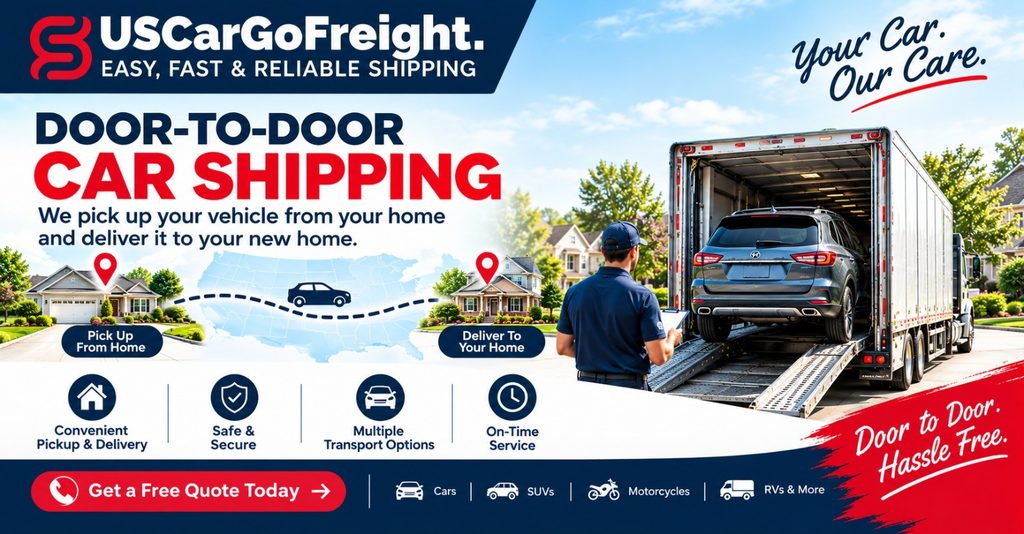
Door-to-door car shipping offers a convenient alternative by arranging vehicle pickup and delivery near your preferred locations. Instead of traveling to a shipping terminal, you can coordinate transportation with an auto transport provider.
At US Car-Go Freight Logistics, we understand the importance of finding a transportation solution that fits your schedule, vehicle type, and budget.
This guide explains how door-to-door auto transport works, the available shipping methods, factors affecting costs, and important steps to take before shipping your vehicle.
What Is Door-to-Door Car Shipping?
Door-to-door car shipping is a vehicle transportation service in which a driver picks up your car near your requested address and delivers it near your chosen destination.
Unlike terminal-to-terminal shipping, which requires customers to drop off and collect vehicles at designated facilities, door-to-door service reduces the need for additional travel.
However, pickup and delivery directly outside your home are not always possible. Large transport trucks may face restrictions involving narrow streets, low-hanging trees, residential parking rules, or limited turning space.
In these situations, the driver may arrange a nearby accessible meeting location.
For example, if you’re shipping a vehicle from Florida to California, the carrier may coordinate pickup near your Florida address and delivery near your California destination.
Benefits of Door-to-Door Car Shipping
1. Convenient Pickup and Delivery
Door-to-door auto transport reduces the need to travel to distant shipping terminals. Customers can coordinate pickup and delivery locations that work with their schedules, subject to carrier accessibility.
2. Saves Time and Travel Expenses
Driving across multiple states may involve fuel costs, meals, overnight accommodations, and time away from work.
Professional auto transport eliminates the need to drive the entire distance yourself, although shipping costs vary by route and vehicle.
3. Reduces Additional Vehicle Mileage
Long-distance driving adds mileage and contributes to tire wear and routine maintenance needs.
Transporting your vehicle on a trailer helps avoid the additional driving mileage associated with a cross-country trip.
4. Suitable for Different Transportation Needs
Door-to-door shipping may be useful for individual car owners, online vehicle buyers, college students, military families, and businesses transporting vehicles between locations.
Service availability depends on the route, vehicle specifications, and carrier requirements.
Door-to-Door Shipping vs. Open and Enclosed Auto Transport
It’s important to understand that door-to-door shipping describes the pickup and delivery arrangement, while open and enclosed transport describe how your vehicle is transported. Both open and enclosed carriers may provide door-to-door service.
Open Auto Transport
Open auto transport uses an open-air trailer that can carry multiple vehicles. It is commonly used for everyday passenger vehicles, including sedans, SUVs, and pickup trucks.
Key advantages:
- Generally more affordable than enclosed shipping.
- Commonly available on many major transportation routes.
- Suitable for most standard vehicles.
Because the trailer is open, vehicles remain exposed to weather, road dust, and other outdoor conditions during transportation.
Enclosed Auto Transport
Enclosed auto transport moves vehicles inside a covered trailer, providing additional protection from weather and road debris. This method is often considered for luxury, classic, collectible, exotic, or specialty vehicles.
Key advantages:
- Additional protection from outdoor elements.
- Suitable for vehicles requiring extra care.
- May offer specialized loading and handling arrangements.
Enclosed transportation generally costs more than open shipping and may have more limited carrier availability. Choosing between these methods depends on your vehicle’s value, condition, transportation needs, and budget.
How Does Door-to-Door Car Shipping Work?
Understanding the process can help you prepare for a smoother transportation experience.
Step 1: Request a Car Shipping Quote
Provide the following information to your auto transport provider:
- Pickup and delivery ZIP codes.
- Vehicle make, model, and year.
- Vehicle running condition.
- Preferred pickup date.
- Open or enclosed transport preference.
These details help determine available shipping options and estimated costs.
Step 2: Review and Confirm Your Booking
Before confirming your shipment, review the written quote, payment terms, estimated scheduling windows, cancellation conditions, and any potential additional charges.
Ask whether the provider is arranging transportation through a third-party motor carrier or operating the vehicle transport equipment directly.
Step 3: Prepare Your Vehicle
Proper preparation helps reduce delays during pickup.Remove personal belongings unless specifically permitted under the transport agreement. Clean your vehicle, check its battery and tires, and disclose any mechanical problems or modifications.
Take clear photographs of the vehicle’s exterior, including any existing scratches, dents, or other damage.
Step 4: Complete the Pickup Inspection and Bill of Lading
At pickup, the driver and customer should review the vehicle condition.
The Bill of Lading (BOL) is an important transportation document that records shipment details and may include the vehicle’s condition at pickup and delivery.
Before signing, check that any existing damage is accurately documented. Keep a copy of the Bill of Lading and your photographs for future reference.
Step 5: Inspect Your Vehicle at Delivery
When your vehicle arrives, inspect it carefully before signing the final delivery paperwork.
Compare its condition with your pickup photographs and the original inspection report. If you notice any new damage, document it on the delivery paperwork, take photographs, and follow the carrier’s claims reporting procedures promptly.
Keep your Bill of Lading, payment records, inspection reports, and related communications until the shipment is fully resolved.
Is US Car-Go Freight Logistics a Broker or Carrier?
Understanding the difference between an auto transport broker and a motor carrier is important when choosing a vehicle shipping provider.
US Car-Go Freight Logistics LLC operates as a licensed and bonded auto transport broker under USDOT Broker License #3911910 and MC #1444325. The company arranges vehicle transportation by connecting customers with independently contracted, licensed, and insured third-party motor carriers.
What Does an Auto Transport Broker Do?
An auto transport broker coordinates the shipping process rather than physically transporting vehicles. US Car-Go Freight Logistics helps arrange transportation by identifying and contracting with an appropriate motor carrier for the customer’s shipment. Its role includes coordinating the transportation arrangement and connecting customers with the carrier responsible for moving the vehicle.
What Does a Motor Carrier Do?
A motor carrier is responsible for physically transporting the vehicle. The assigned carrier handles the vehicle’s pickup, loading, transportation, and delivery under the applicable transportation agreement. The carrier’s details and relevant insurance information should be reviewed before shipping.
How Does This Work for Your Shipment?
When you book through US Car-Go Freight Logistics, the company arranges transportation through a third-party motor carrier rather than using its own trucks to transport your vehicle. Pickup and delivery arrangements depend on the assigned carrier, route availability, road access, and scheduling conditions.
Before your shipment begins, review your booking agreement, confirm the assigned carrier’s information, and understand which company is responsible for physically transporting your vehicle. You can also verify the broker’s registration through the Federal Motor Carrier Safety Administration (FMCSA).
This broker-based approach allows US Car-Go Freight Logistics to coordinate vehicle shipments using its network of third-party carriers. Pickup and delivery dates remain estimates and are subject to transportation conditions and the terms of your agreement.
Frequently Asked Questions About Door-to-Door Car Shipping
1. Are Pickup and Delivery Dates Estimated or Guaranteed?
Ans. Pickup and delivery dates are generally estimates rather than guarantees. Actual scheduling depends on carrier availability, weather, traffic, road conditions, and transportation routes.
US Car-Go Freight Logistics customers should review their booking agreement and confirm the estimated pickup and delivery windows before scheduling a shipment.
2. What Does the Quoted Shipping Price Include, and When Can It Change?
Ans. A car shipping quote is based on details such as transportation distance, vehicle size, condition, pickup and delivery locations, and the selected transport method.
The final agreement should explain the transportation charges, applicable broker fees, payment arrangements, and any additional costs.
Pricing may change if shipment details change, specialized equipment is required, or other conditions affect carrier availability. Customers should review and approve any proposed changes before proceeding.
3. Can an Inoperable or Modified Vehicle Be Shipped?
Ans. Yes, some carriers can transport inoperable or modified vehicles, depending on their equipment and loading capabilities.
Non-running vehicles may require specialized loading equipment, such as a winch. Modified vehicles with lowered suspension, oversized tires, or other alterations may require additional handling.
Customers should disclose the vehicle’s condition and modifications before booking. Availability and additional charges must be confirmed for the specific shipment.
4. Whose Insurance Applies During Vehicle Transportation?
Ans. The motor carrier physically transporting the vehicle generally provides the applicable cargo insurance coverage.
Customers should verify the assigned carrier’s insurance before pickup and review the following:
- Coverage limits: The maximum amount payable under the applicable policy.
- Deductibles: Any deductible that may apply to a covered claim.
- Exclusions: Types of damage or loss not covered by the policy.
- Claims procedures: Required documentation, reporting deadlines, and steps for submitting a claim.
At pickup and delivery, inspect your vehicle carefully, document its condition on the Bill of Lading, and retain photographs and copies of all shipping documents.
Insurance coverage and claims are subject to the applicable policy and transportation agreement.
Why Choose US Car-Go Freight Logistics?
US Car-Go Freight Logistics helps customers explore vehicle transportation solutions for different shipping needs across the United States.
Whether you’re purchasing a vehicle from another state, planning a long-distance move, or arranging transportation for a family member, understanding the available options can help you plan effectively.
By providing accurate pickup and delivery details, vehicle information, and scheduling preferences, customers can request shipping options suited to their needs.
Before booking, confirm the transportation arrangements, estimated schedule, pricing terms, and applicable carrier information.
Conclusion
Door-to-door car shipping offers a convenient way to transport a vehicle over long distances without driving it yourself. By choosing the right transport method, reviewing shipping costs, and understanding pickup and delivery arrangements, you can make an informed decision.
Before booking, verify the carrier’s credentials, review the applicable insurance coverage, confirm the terms of your quote, and document your vehicle’s condition on the Bill of Lading at pickup and delivery.
US Car-Go Freight Logistics helps customers explore vehicle transportation options based on their shipping needs. For more information or to request a personalized shipping quote, visit US Car-Go Freight Logistics.