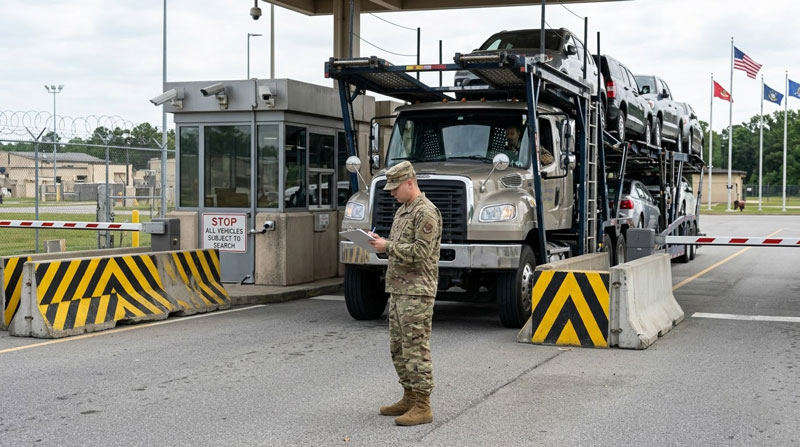
A military move to a new post is one of the most challenging logistics tasks you will face as a service member. Typically, a Personally Owned Vehicle (POV) is among the last things taken care of – and the most nerve-racking one. Whether you need military auto transport across the country or just a few states over, this article describes exactly how military PCS car shipping works, what the government does (and doesn’t) cover, and how you can ship your car to your new post without any difficulties.
| Move Type | Government Coverage | Private Broker Option |
|---|---|---|
| CONUS (stateside) | No direct coverage | Yes — US Car-Go Freight ships door-to-door, all 48 states |
| Alaska / Hawaii | Partial — check your orders | Contact your TMO; private brokers may assist depending on orders |
In the case of a CONUS PCS move, it is typical for most military service members to engage the services of a licensed auto transport broker to coordinate door-to-door shipping. The steps that follow in order are:
US Car-Go Freight requires no upfront deposit and is a licensed broker with verified carriers only — no marketplace guesswork.
| Route Example | Estimated Range | Transit Time |
|---|---|---|
| East Coast → Southeast | $500–$800 | 3–5 days |
| Southeast → Midwest | $600–$900 | 4–6 days |
| East Coast → West Coast | $900–$1,400 | 7–10 days |
| Midwest → Pacific Northwest | $700–$1,100 | 5–8 days |
| Texas → Florida | $600–$850 | 3–5 days |
If your vehicle doesn’t start or drive, it can still be shipped — carriers use a winch to load it. Expect to pay a non-operational surcharge, typically $150–$250 extra.
You can ship both POVs with a private broker. Each is quoted separately. Some service members ship one and drive the other, depending on distance and timing.
If you’re deploying before your household goods move, a spouse or designated family member can coordinate the vehicle pickup and delivery. The broker just needs the name of whoever is receiving the car.
If you have orders immediately following a deployment, US Car-Go Freight can coordinate pickup from a family member’s address and deliver to your new duty station. Just let us know the full situation when you request a quote.
| Timeframe Before Report Date | What to Do |
|---|---|
| 4–6 weeks out | Get quotes, choose a broker, lock in your dates |
| 3–4 weeks out | Confirm booking, start vehicle prep |
| 1–2 weeks out | Final inspection, remove all personal items, photograph condition |
| Pickup day | Hand off keys, sign the Bill of Lading |
| Delivery day | Inspect vehicle against the Bill of Lading before signing off |
There’s no direct reimbursement program for CONUS POV shipping. However, your Dislocation Allowance (DLA) is a lump-sum payment meant to offset PCS-related expenses, and shipping your vehicle qualifies as one of them. Talk to your finance office about what you’re entitled to.
Minimum of two weeks; 4–6 weeks in PCS season (May to August). Carrier availability becomes tough in the summer months and prices also rise with demand.
If using private transport, the majority of carriers allow up to 100 lbs of personal items in the trunk. The items are shipped uninsured and at your own risk. When in doubt, remove everything — it protects you if there’s any issue at delivery.
All licensed carriers have cargo insurance. Through booking with US Car-Go Freight, your vehicle is automatically covered under the cargo insurance of that carrier’s policy for the duration of transport. Make sure you document any pre-existing damage to your vehicle before pickup since any new damage will be easier to prove at delivery.
Sometimes it happens. Contact your broker immediately; most of them will be able to change the pickup time or destination if there is enough time. Any changes made near the pickup date may incur a rescheduling fee from the carrier.